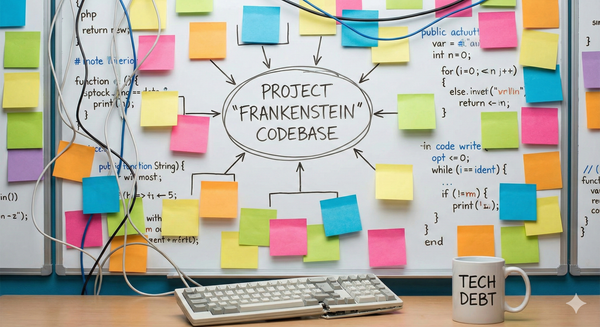
The "Fixed Price" Mirage: Why You’re Buying Technical Debt, Not Certainty
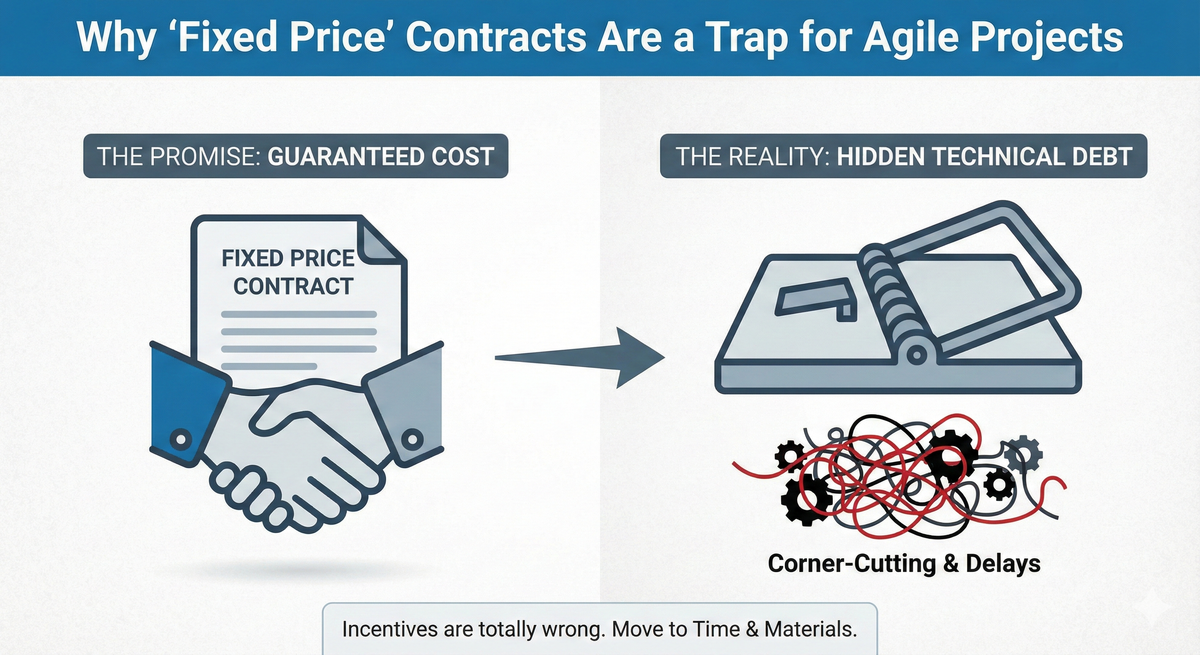
Your CFO loves fixed-price contracts.
They fit perfectly into a Q3 budget spreadsheet. You know exactly what you are spending. You have a signed piece of paper promising a specific set of features on a specific date. It feels safe.
It is actually the riskiest way to build software.
In agile development, a fixed-price bid is a lie agreed upon by both parties. You pretend requirements won't change. The vendor pretends they know exactly how long complex engineering tasks will take.
When reality hits, the contract doesn't protect you. It actively incentivizes the vendor to build bad software.
Here is why the fixed-price model fails for complex development, and how to structure an engagement that actually aligns incentives.
The Incentive Trap
When a development shop signs a fixed-price agreement, their goal immediately shifts.
Their objective is no longer to build the best possible product for your users. Their objective is to protect their margin. Every hour spent refactoring messy code, improving a UI element, or addressing unforeseen technical hurdles eats directly into their profit.
The contract forces them to prioritize "done" over "good."
This creates an adversarial relationship from day one.
- The Change Order Battle: You discover a user requirement has shifted. You ask for a change. The vendor points to the scope document. Everything stops while you negotiate a change order with a new price tag. Velocity dies.
- The Quality Illusion: The vendor will deliver exactly what was spec'd. But they will take the shortest technical path to get there. They skip automated tests. They hardcode variables. They ignore scalability.
- The "Letter of the Law" Delivery: You get 100% of the agreed scope on the agreed date. But the market shifted three months ago. You now own a perfectly executed obsolete product.
You didn't buy cost certainty. You bought guaranteed technical debt that will slow down your team for years.
Alignment Through Time and Materials (T&M)
The alternative sounds scary to many founders: Time and Materials (or dedicated team models).
It feels like writing a blank check. If the vendor bills by the hour, what stops them from taking forever?
This is a valid fear only if you completely abdicate management.
A T&M model aligns incentives. The vendor is paid to apply their best engineering talent to your highest-priority problems every sprint. If a requirement changes, you don't fight about scope. You just reprioritize the backlog for the next sprint.
The goal shifts from "protecting margin" to "delivering continuous value so the client keeps us around."
How to Control T&M Costs Without Fixed Bids
You don't need a fixed bid to have budget discipline. You need active management and transparency.
We advise clients to govern T&M engagements with strict operational controls rather than rigid legal scopes.
The T&M Control Checklist:
- Sprint-based Budgets: Cap spending on a two-week cycle. You know exactly what a sprint costs.
- Weekly Burn Reports: Demand a Friday report showing hours logged against specific tickets. If velocity looks off, you catch it in days, not months.
- Ruthless Prioritization: Your Product Owner controls the backlog. You only build the highest-value features. You control cost by cutting low-value scope, not by squeezing engineering quality.
- Embedded QA: Don't wait until the end to test. QA happens within the sprint to catch regressions immediately.
A Quick Case Study
We took over a project from a "low cost" fixed-price vendor. The client was six months in and had nothing deployable. The vendor claimed the project was 90% complete based on the scope document.
The reality was a disaster. The code was brittle. Nothing was documented. The vendor demanded $15,000 change orders for basic bug fixes because they fell "outside original scope."
We switched the engagement to a dedicated team model. We scrapped the 200-page requirements doc and moved to a prioritized backlog.
We didn't promise a fixed cost. We promised deployable code every two weeks. The client started seeing working features in the first sprint. They were in total control of the spend, and the resulting platform was actually scalable.
Stop looking for guarantees on paper. Start looking for aligned incentives and transparent processes.
If you are currently negotiating a major outsourced development contract, let's review the terms to ensure you aren't buying future debt.